Monsoon and birds have always seemed connected to me. A few days before the real rain arrives, the landscape changes quietly. The air becomes heavier. Frogs begin calling from unseen puddles. Ants start moving in long black lines. Then certain birds suddenly become louder, as if they know something the rest of us do not.
One of those birds is the White-breasted Waterhen.
If you have travelled anywhere across tropical Asia during the rainy season, especially from India to the Philippines, there is a good chance you have already heard it. Usually not from inside a city, but from the edges of wetlands, village ponds, paddy fields, or roadside marshes where rainwater slowly gathers. The call is loud, repetitive, slightly chaotic, and impossible to ignore once you learn it. During the early monsoon evenings, the sound carries through wet air like an argument taking place somewhere inside the reeds.
The White-breasted Waterhen belongs to the rail family. Rails are usually shy birds that prefer hiding inside thick vegetation. Most of the time they move quietly through marshes without being seen. But breeding season changes them completely. With the arrival of rain, they become vocal, territorial, and unexpectedly bold. They come out into open spaces, call constantly, chase rivals, and search for mates. Suddenly the silent marsh begins sounding alive.
I have seen this bird many times during my travels, but one encounter stayed with me. It was in a paddy field in southern India during the first phase of monsoon. The rain had stopped only briefly and the field was still holding shallow water. I was expecting the bird to disappear the moment it noticed me. Waterhens usually do that. Instead, this one walked out slowly into the open and stood there for several minutes as if it had nowhere else to be. Every now and then it gave that loud call, stretched its neck slightly, and continued walking through the flooded field with those oversized feet that all rails seem to possess.
There was nothing dramatic about the moment. No rare species. No spectacular light. Yet the bird somehow carried the feeling of monsoon itself. Slightly restless. Slightly muddy. Comfortable in rain.
The species is common across much of Asia and adapts surprisingly well around people. You can find it near village canals, ponds, wetlands, and even city edges if there is enough vegetation. In the Maldives, it is recognised as the national bird and locally called the Kanbili. Most people know it by sound long before they learn its name.
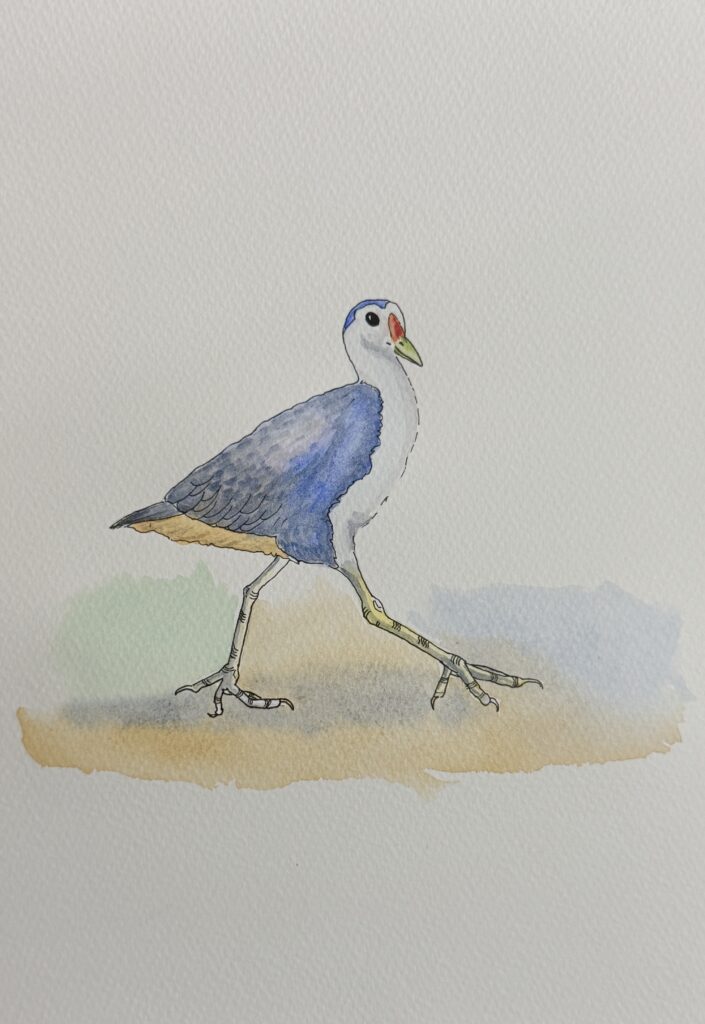
Recently I decided to sketch the bird as part of my slow travel sketching series. I did not want to make it into a polished wildlife illustration. That would have removed something important from the subject. Instead I tried to keep the lines loose and the washes soft, allowing the posture and mood to carry the sketch. The lowered body, nervous walk, and damp grey-blue tones felt more truthful than detailed feather work.
Sketching birds changes the way we travel. Photography often happens quickly. You see something, raise the camera, and the moment is gone. Sketching forces you to stay longer. You begin observing movement, balance, behaviour, and small details that normally escape attention. You notice how a bird pauses before calling, how it shifts weight while walking, or how rain changes the colour of mud and feathers.
That is why I keep encouraging non-artists to sketch during travel. It is not about producing perfect drawings. It is about slowing down enough to actually see the place you are standing in.
For this sketch, I have also prepared a downloadable PDF version for anyone who wants to sketch along or add their own washes. A notebook, a pen, and a bird calling from a marsh before rain are enough to begin.