A few years ago, during the second week of October, I was travelling through Himachal Pradesh on a bird photography journey in search of the Himalayan Monal. The plan was simple. Reach the higher forests before winter, photograph the bird, and slowly return before the mountains decided otherwise. In the Himalayas, journeys often change shape on their own.
We entered through Shimla and moved gradually towards the Kinnaur region. The roads curled around mountains like uncertain handwriting, sometimes carved directly into cliffs where loose stones still rested on the edges from older landslides. Below us rivers rushed through deep valleys carrying melted glacier water towards distant plains. Above us hung mountains already preparing for winter.
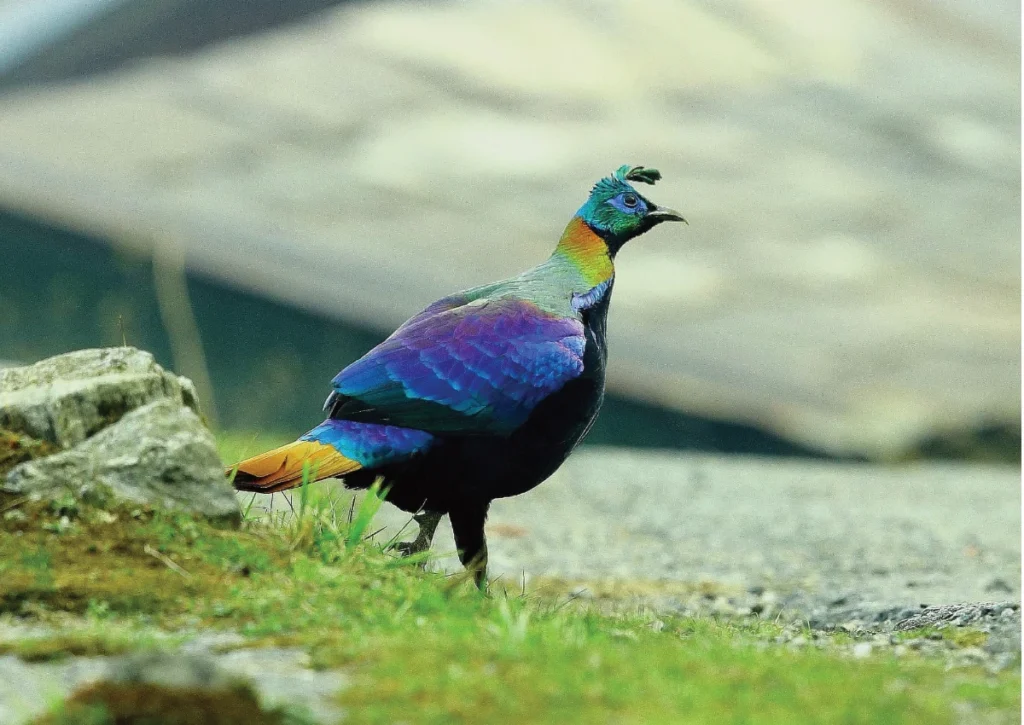
Around Sangla and the slopes near Kalpa, we finally found the Himalayan Monal.
Even now I remember that moment clearly. The bird did not arrive dramatically. It simply appeared between rocks and dwarf rhododendrons as though it had always belonged there and we were the intruders. The metallic colours on its feathers changed constantly with the shifting mountain light. Blue became green. Green became copper. The bird walked quietly through the cold ground as if it carried its own weather around it.
For two days the Monal occupied our minds completely. We woke before sunrise, climbed slopes in freezing wind, waited silently among pine shadows, and drank tea from roadside stalls where old men watched the mountains more than they watched people. By then October had settled properly across the Himalayas. The mornings smelled faintly of smoke and frost. Thin sheets of ice formed near water pipes. Drivers had already started discussing snowfall in cautious voices.
Then one afternoon, almost casually, someone mentioned Spiti Valley.
“Roads may close anytime,” our driver said.
That sentence should have discouraged us. Instead it became the reason to go.
Across the High Roads of Himachal
The next morning we started early. Villages still looked half asleep under the cold light. Prayer flags fluttered from rooftops. Women in woollen shawls carried firewood bundles larger than themselves. Somewhere in the distance dogs barked at nothing visible.
As we drove deeper into Kinnaur the landscape slowly began changing. The greener valleys disappeared behind us. Trees became fewer. Villages became smaller. Even colours started withdrawing from the mountains except for grey rock, pale dust, old snow and patches of dry grass turning deep ochre before winter.
There was very little traffic. Occasionally a military truck appeared from the opposite direction or a local bus leaned dangerously towards the valley edge before disappearing around another bend. Otherwise the road belonged mostly to silence.
I remember one particular stop near a roadside tea stall built from corrugated sheets and stone. Steam rose from blackened kettles while clouds drifted slowly between mountain ridges like wandering spirits searching for forgotten monasteries. Nobody spoke much. In high mountains conversations become unnecessary after a point. People begin listening instead. To wind. To distant water. To the strange pressure of silence itself.
Spiti Valley lies in the cold desert region of Himachal Pradesh near the Tibetan plateau. Most of the valley stands above 12,000 feet. Key Monastery itself rises at around 13,500 feet overlooking the Spiti River and the villages scattered below. Unlike the greener Himalayan regions filled with forests and waterfalls, Spiti feels stripped bare. Mountains stand exposed to weather and sky without softness. Villages cling to slopes as though they arrived there centuries ago and simply refused to leave.
The journey from Shimla into Spiti through the Kinnaur region usually takes several days when travelled slowly, especially with stops around Sangla, Kalpa and the higher valleys for photography and acclimatisation. During October the roads remain open most of the time, but snowfall can change conditions overnight. In the Himalayas roads are temporary agreements between humans and nature.
By afternoon the light had already started changing. Shadows stretched longer across the valleys. Mountains darkened from brown to charcoal. Fresh snow on distant ridges reflected the last pale sunlight. We reached Key Monastery around 3:30 in the afternoon with the cold already beginning to sharpen.
I stepped out of the vehicle and looked up.
Key Monastery did not appear grand in the usual sense. It looked as though it had grown slowly over centuries, one uncertain structure added above another, until the mountain itself finally accepted it as part of the landscape.
Buildings climbed over each other in uneven layers. Walls leaned slightly. Roofs sat at awkward angles. Windows repeated endlessly across whitewashed surfaces like silent eyes watching the valley. Nothing looked planned, yet the entire monastery carried its own strange harmony.
Behind it rose dark mountain ridges streaked with fresh snow. The slopes below carried dry grass glowing deep ochre under the fading evening light. Most windows were closed against the cold. A few glowed softly from inside with warm yellow light. Those small squares of warmth stayed in my memory longer than the mountains themselves.
The air felt incredibly still.
Some places make you speak softly without knowing why. Key Monastery was one of them.
A monk crossed the courtyard carrying something wrapped in cloth. Somewhere metal struck faintly against stone. Ravens circled above the ridges. The wind carried distant sounds which never fully arrived.
As darkness approached the monastery slowly merged with the mountain itself. It no longer looked constructed by people. It looked grown out of rock through hundreds of winters.
That evening we stayed nearby. I remember waking during the night and stepping outside briefly. The valley was silent except for the wind moving through unseen spaces between buildings and ridges. Above us the stars looked unnaturally close, as though the sky itself had descended lower into the mountains. For a moment I felt the monastery was still awake behind the darkness, breathing quietly with the mountain.
Sketching Memory, Light and Silence in Spiti Valley
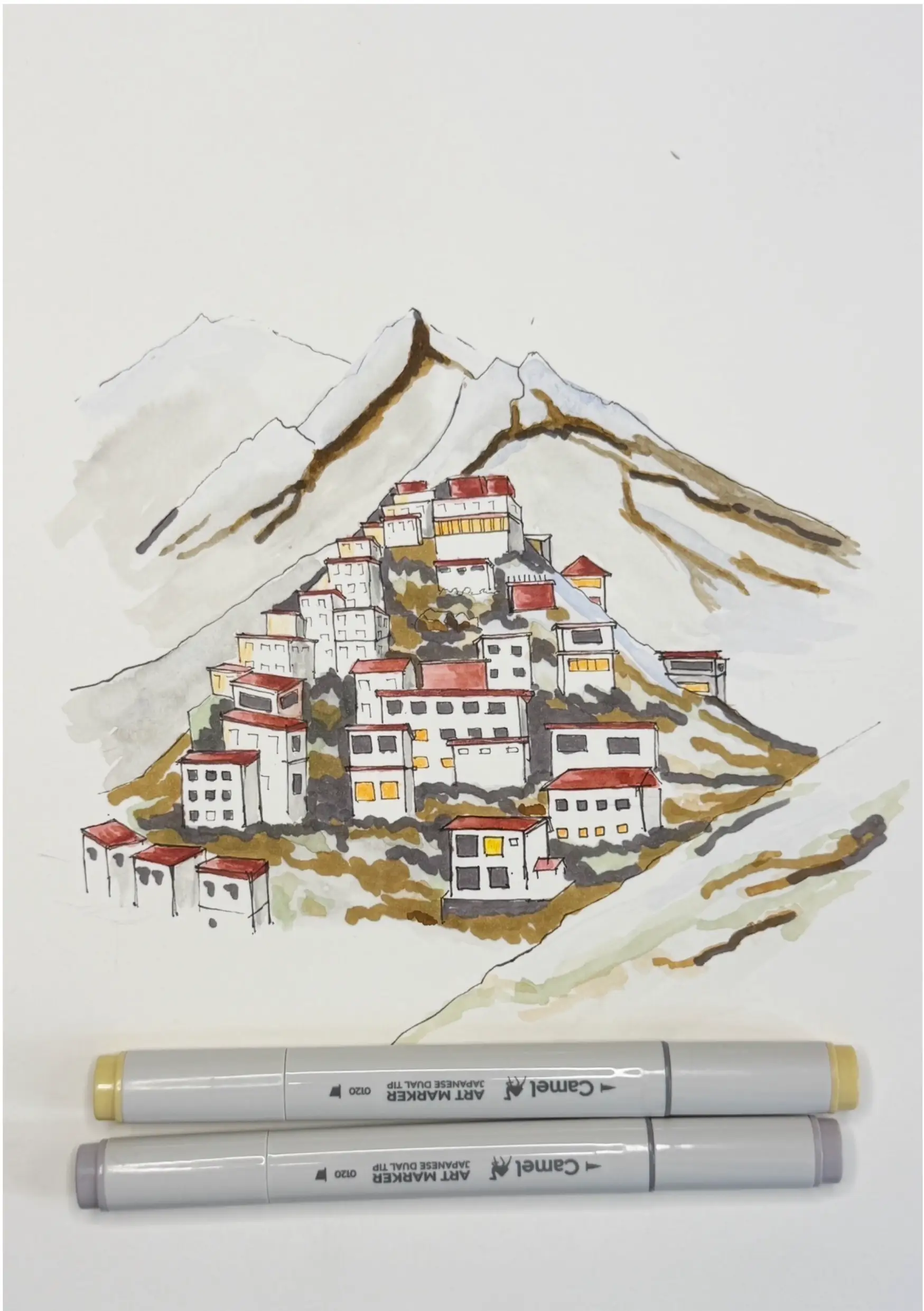
When I returned home later and decided to sketch Key Monastery, I realised I was not interested in architectural accuracy. Many artists can draw buildings perfectly. That was never my intention.
I wanted to paint memory.
I began with simple ink outlines using fine liners, allowing slight imperfections to remain because the monastery itself is imperfect. Trying to straighten every line would have removed its character. I concentrated mainly on the stacked feeling of the buildings climbing the slope rather than individual architectural details.
The mountains behind were painted loosely with diluted grey washes, allowing the white paper to remain visible in many places so that snow could emerge naturally without explanation. I did not want dramatic skies or exaggerated colours. Spiti already carries enough drama inside its silence.
For colour I kept the palette restrained. Burnt sienna and copper tones were used for roofs and dry grass. Soft greys defined mountain shadows and distant ridges. A touch of yellow ochre inside a few windows suggested warmth hidden behind cold stone walls. Large areas of untouched paper remained because emptiness itself felt important to the landscape.
While sketching, I realised something strange. I was no longer drawing the monastery exactly as I had seen it. I was drawing how the place remained inside me after years.
That perhaps is the real difference between photography and sketching.
A camera records surfaces. Memory edits them.
Even now, when I think about Key Monastery, I do not remember every detail clearly. I remember dark ridges under fresh snow. Closed windows. Ochre grass. Thin cold air. The feeling that winter was standing quietly somewhere beyond the next mountain bend, waiting patiently for us to leave.